

Connecting Ships in a Digital World
The Evolution of Maritime Communication
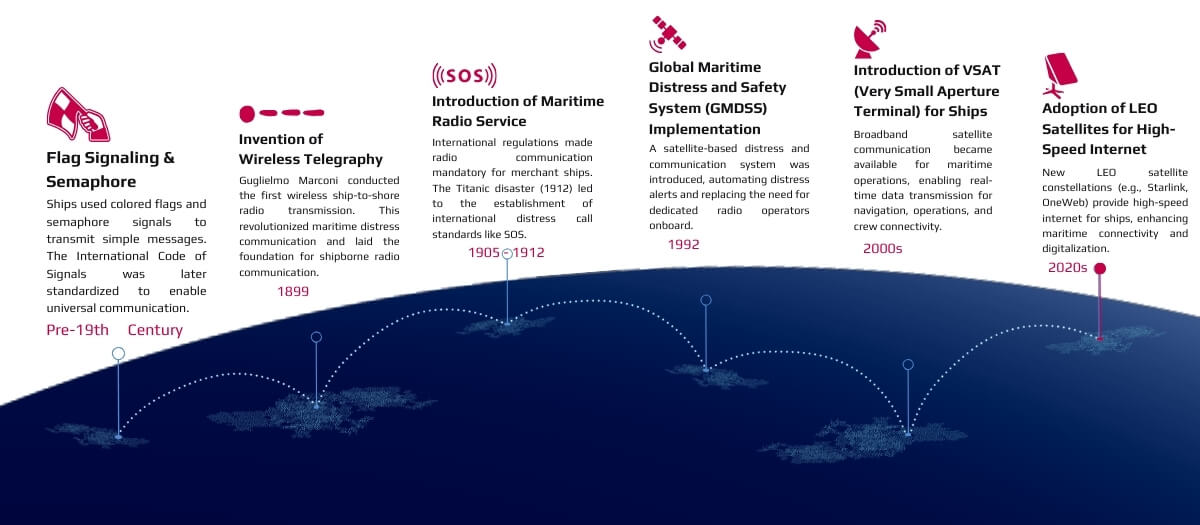
Maritime communication has come a long way from the days of signal flags and Morse code. What started as simple ship-to-ship and ship-to-shore messaging has transformed into a complex ecosystem of digital networks, satellite connections, and automated data transfers. Today, real-time communication is not just a convenience but a necessity for safety, navigation, and operational efficiency at sea.
Why Communication Matters at Sea
Maritime communication has come a long way from the days of signal flags and Morse code. What started as simple ship-to-ship and ship-to-shore messaging has transformed into a complex ecosystem of digital networks, satellite connections, and automated data transfers. Today, real-time communication is not just a convenience but a necessity for safety, navigation, and operational efficiency at sea.
Safety and emergency response
Immediate alerts and coordination in distress situations.
Operational efficiency
Real-time data exchange for fleet management and logistics.
Regulatory compliance
Transmission of mandatory reports, such as emissions data and vessel tracking.
Crew welfare
Access to the internet and personal communication channels.
The Backbone: Satellite Communication
One of the biggest breakthroughs in maritime communication has been the use of satellites. With multiple constellations operating in Low Earth Orbit (LEO), Medium Earth Orbit (MEO), and Geostationary Orbit (GEO), ships now have options tailored to their specific needs.
- LEO satellites offer low-latency connections, making them ideal for real-time applications like remote monitoring and video conferencing.
- MEO satellites provide a balance between coverage and speed, often used for navigation and operational data transfer.
- GEO satellites cover large areas and are commonly used for traditional maritime broadband services.
Digitalization and the Role of Data
With increasing digitalization, ships have become floating data hubs. Sensors continuously collect and transmit data on engine performance, weather conditions, cargo status, and fuel consumption. This information is processed onshore to optimize vessel operations and reduce fuel costs.
- Performance monitoring: Ships can now track fuel efficiency, engine status, and weather impact in real-time.
- Predictive maintenance: Data analytics help detect issues before they lead to equipment failure.
- Remote diagnostics: Engineers onshore can assist crew members with troubleshooting and system updates.